© 2026 Euforia Digital, All rights reserved

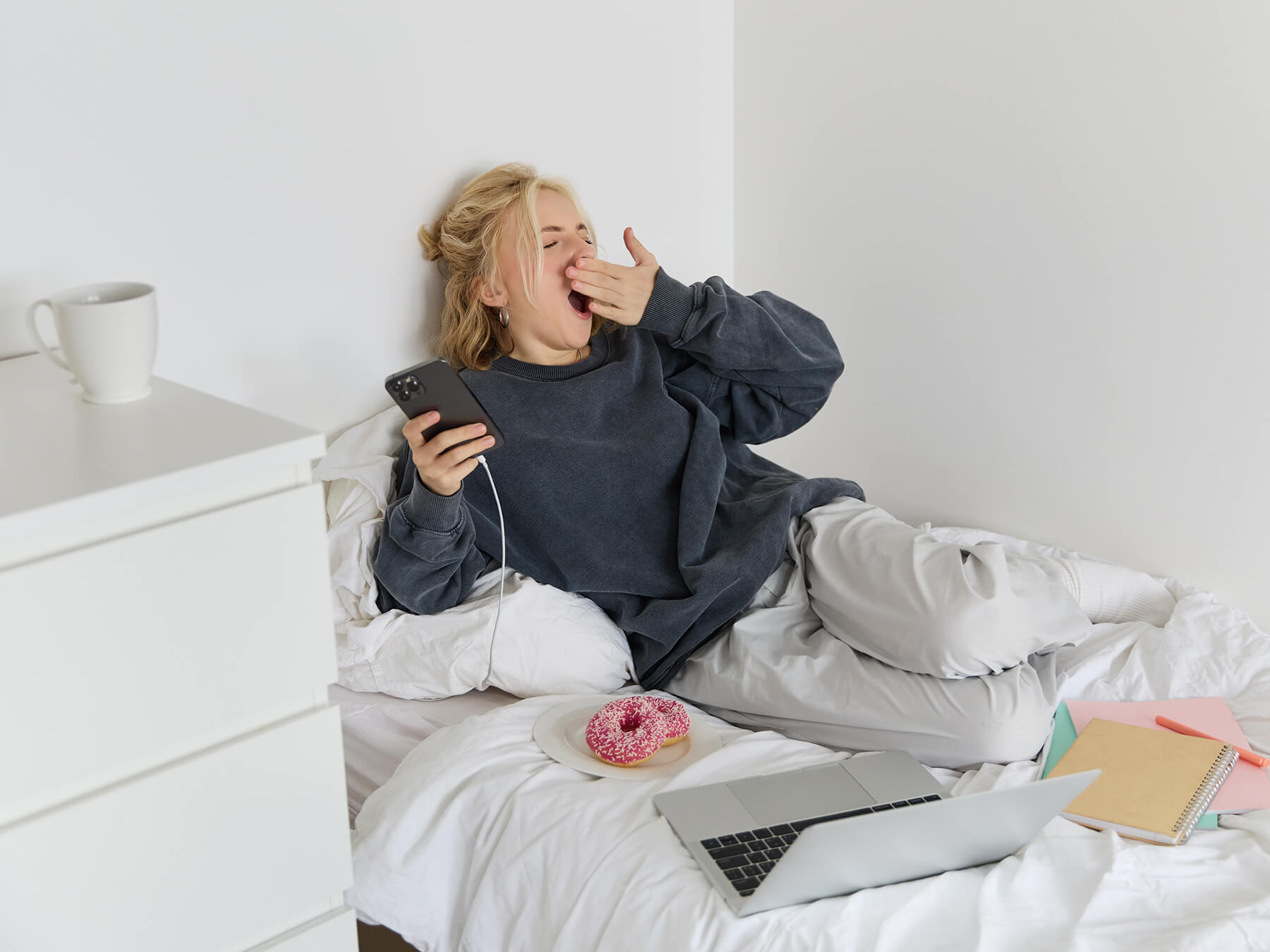
It often begins with a simple thought.
“I need to fall asleep soon.”
At first, it feels harmless – just a reminder that rest is important. But then something shifts. You start noticing how awake you are. You check the time. You calculate how many hours of sleep you still have left. You become aware of every sensation in your body, every thought in your mind, every second passing without sleep. And suddenly, sleep itself becomes the problem. This is what sleep anxiety feels like – when the fear of not sleeping makes it even harder to fall asleep.
Instead of drifting into rest, the mind becomes focused on performance. Sleep turns into something you are trying to achieve, rather than something that happens naturally. And the more you try to force it, the more alert you feel.
Sleep anxiety often starts with a single difficult night. Maybe you couldn’t fall asleep, or you woke up feeling exhausted the next day. That experience creates concern about sleep, and that concern carries into the next night.
Over time, the brain begins to associate bedtime with pressure. Instead of signaling rest, the moment you lie down becomes a trigger for alertness.
The mind starts monitoring sleep:
This monitoring activates the nervous system, making sleep even more difficult.
Sleep anxiety often develops into a repeating loop:
You feel tired and go to bed →
You start thinking about sleep →
You notice you are awake →
Anxiety increases →
Your body becomes more alert →
Sleep becomes harder →
Anxiety grows further
In this cycle, the problem is not lack of sleep itself – it is the emotional response to not sleeping. The nervous system reads anxiety as a signal to stay awake, because it interprets alertness as a form of protection.
Sleep requires a sense of safety. The nervous system needs to feel that it is okay to let go of control. But anxiety does the opposite. It increases monitoring, anticipation, and mental activity. This creates a conflict inside the system: one part of you wants rest, while another part is trying to stay alert and “fix” the situation. This internal tension is often what keeps people awake, even when the body is physically tired.
A major factor in sleep anxiety is what can be called sleep performance pressure – the belief that sleep is something you must do correctly.
This turns sleep into a task:
But sleep is not a performance. It is a biological process that cannot be forced. When pressure increases, the nervous system becomes more activated, which directly interferes with the ability to fall asleep.
When sleep anxiety is active, the body often behaves as if it is preparing for action rather than rest. The heart rate may increase slightly, muscles may stay tense, and breathing may become shallow or irregular. The mind remains active, scanning for solutions, while the body receives signals that something needs attention. This combination makes it difficult for the system to transition into deeper stages of rest.
One of the most frustrating aspects of sleep anxiety is that effort often increases the problem. Trying to force sleep keeps attention focused on sleep itself. And attention is a form of activation. The more you check, analyze, or worry about sleep, the more awake the nervous system becomes. This is why many people find that sleep comes more easily when they stop trying to control it.
The first step in working with sleep anxiety is shifting the goal. Instead of trying to “fall asleep,” the focus becomes helping the body feel safe enough to rest. This removes pressure from the system and reduces the internal conflict between effort and relaxation. One helpful approach is allowing sleep to be a byproduct of rest, rather than a goal that must be achieved.
When sleep anxiety is present, the nervous system benefits more from calming signals than from mental effort. Slow, steady breathing can help reduce physical arousal. Gentle awareness of the body – such as noticing contact with the bed or the sensation of heaviness – can help shift attention away from thoughts and into physical presence. Even if sleep does not come immediately, these practices support the body in gradually moving toward rest.
Over time, sleep anxiety often improves when the nervous system begins to relearn that bedtime is safe. This happens not through pressure, but through repetition of calm experiences. Nights where there is no urgency, no pressure, and no fear gradually rebuild trust in the sleep process. As this trust returns, the mind becomes less focused on control and more able to let go naturally.
Sleep anxiety can feel frustrating because it creates the exact opposite of what you want – the more you try to sleep, the more awake you feel. But sleep is not something that can be achieved through effort alone. It happens when the mind stops trying to control it. The fear of not sleeping is often more disruptive than the lack of sleep itself. And when that fear begins to soften, sleep naturally becomes more accessible again. You do not need to win the battle with sleep. You only need to allow your body the space to return to it.